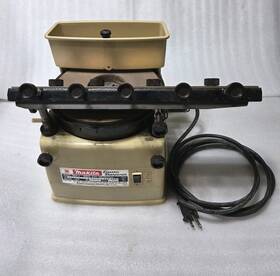
( Brand: Makita ), ( Manufacturer Part Number: 9802-2 ), ( Features: Electric ), ( Type: Electric Planer Blade Sharpener ), ( Country Of Origin: Japan )
Review MAKITA Electric Knife Blade Sharpener Planer/jointer Blades Japan
The **Makita 9802-2 and 9820-2 Electric Knife Blade Sharpener** is a precision-engineered power tool designed to restore razor-sharp edges to planer and jointer blades with unmatched efficiency and consistency. This professional-grade sharpening system combines the durability of Makita s renowned engineering with a user-friendly interface, making it an indispensable tool for woodworkers, cabinetmakers, and DIY enthusiasts who demand flawless blade performance. The **9802-2** serves as the base unit, housing a robust electric motor that delivers smooth, vibration-free operation, while the **9820-2** is the interchangeable sharpening head, featuring a high-quality abrasive wheel that progressively refines blade edges to a fine, uniform finish. Unlike manual sharpening methods that rely on guesswork and inconsistent pressure, this electric system ensures repeatable results with minimal effort, significantly reducing downtime in workshops where precision is critical.
What sets this sharpening system apart is its versatility and adaptability. The **9820-2 sharpening head** is engineered to accommodate a wide range of blade profiles, from standard planer knives to specialized jointer blades, thanks to its adjustable angle and clamping mechanism. The abrasive wheel is designed to maintain a consistent cutting angle, which is essential for achieving optimal blade performance and extending the life of both the blade and the sharpening tool. The system s ergonomic design allows for easy handling, with a sturdy base that provides stability during operation, while the motor s quiet yet powerful performance minimizes fatigue during extended use. Additionally, the tool s compact yet robust construction ensures it can be easily integrated into any workshop setup, whether in a dedicated sharpening station or on a mobile cart for on-the-go maintenance.
For woodworkers who prioritize both efficiency and longevity, the **Makita 9802-2 and 9820-2** sharpening system delivers a seamless sharpening experience that transforms dull, inefficient blades into sharp, cutting tools in minutes. The combination of Makita s reliability, the precision of the sharpening head, and the ease of use makes this an investment in productivity and craftsmanship. Whether maintaining a single jointer blade or a fleet of planer knives, this system ensures that every cut is clean, every surface is smooth, and every project benefits from the precision that only a properly sharpened blade can provide. With its durable construction, consistent performance, and professional-grade results, the Makita 9802-2 and 9820-2 sharpening system is a must-have for anyone serious about achieving perfection in their woodworking.
The Makita 9802-2 and 9820-2 are electric knife blade sharpeners designed for planer and jointer blades, offering a more efficient alternative to manual sharpening. Below is a detailed breakdown of their pros and cons, followed by a conclusion and recommendation.
### **Pros of the Makita 9802-2 and 9820-2**
1. **Precision and Consistency** These sharpeners use a rotating abrasive wheel or belt to maintain a uniform bevel angle, ensuring blades are sharpened evenly and consistently. This reduces the risk of uneven wear that can occur with manual sharpening.
2. **Time Efficiency** Electric sharpeners significantly reduce the time required compared to manual methods. A skilled user can sharpen multiple blades quickly, improving workflow in woodworking shops.
3. **Durability and Longevity** Makita is known for producing high-quality, durable tools. These sharpeners are built to last with robust construction, reducing the need for frequent replacements.
4. **Safety Features** Both models include safety guards and sometimes adjustable depth stops to prevent over-sharpening or accidental injury. The 9820-2, in particular, offers additional safety refinements over the 9802-2.
5. **Versatility** These sharpeners can handle various blade types used in planers and jointers, including both straight and curved blades. Some models also accommodate different bevel angles, making them adaptable to different sharpening needs.
6. **Reduced Physical Strain** Manual sharpening can be labor-intensive and tiring, especially for large or thick blades. Electric sharpeners eliminate this strain, allowing for longer, more productive sessions.
7. **Better Edge Quality** The controlled motion of the electric wheel or belt produces a sharper, more refined edge compared to manual methods, which can sometimes leave rough spots or inconsistencies.
8. **Ease of Use** Both models are designed with user-friendly features, such as quick-release mechanisms for blade installation and adjustable settings for different blade profiles.
---
### **Cons of the Makita 9802-2 and 9820-2**
1. **Initial Cost** These sharpeners are more expensive upfront compared to manual sharpening tools like honing stones or files. The investment may not be justified for hobbyists or those who sharpen blades infrequently.
2. **Maintenance Requirements** Electric sharpeners require periodic maintenance, such as replacing abrasive belts or wheels, cleaning debris from the wheel, and ensuring the machine is properly lubricated. Neglecting maintenance can lead to poor sharpening results or equipment failure.
3. **Learning Curve** While easier than manual sharpening, these tools still require some familiarity with blade geometry and bevel angles. Improper use can result in damaged blades or uneven sharpening.
4. **Limited Portability** These sharpeners are not as portable as manual tools. They require a power source and a stable workspace, making them less suitable for on-site or fieldwork.
5. **Potential for Over-Sharpening** Without proper adjustments, the depth stop or bevel angle settings can lead to blades being sharpened too aggressively, reducing their lifespan or causing unnecessary wear.
6. **Noise and Vibration** Electric sharpeners can be noisy and generate vibration, which may be uncomfortable for prolonged use. This could be a concern in shared workspaces or for users sensitive to noise.
7. **Dependence on Power** Since these tools are electric, they require access to electricity. This limits their use in areas without power or during power outages.
8. **Cost of Consumables** Over time, the cost of replacing abrasive belts or wheels can add up, particularly if the tool is used frequently. The 9820-2, being a more advanced model, may also require more expensive consumables.
---
### **Conclusion**
The Makita 9802-2 and 9820-2 are excellent choices for woodworkers who prioritize efficiency, precision, and consistency in sharpening planer and jointer blades. They are particularly well-suited for professional shops, contractors, or serious hobbyists who frequently work with power tools and require high-quality results. The 9820-2 offers additional refinements over the 9802-2, making it the better option for those who want enhanced safety, versatility, and ease of use.
However, these sharpeners are not ideal for everyone. Hobbyists with limited sharpening needs, those on a tight budget, or users who prefer manual control may find the cost and complexity of these tools unnecessary. Additionally, the maintenance requirements and dependence on electricity could be drawbacks for some users.
### **Recommendation**
- **Buy the Makita 9802-2 or 9820-2 if:**- You are a professional woodworker or contractor who frequently sharpens planer and jointer blades.
- You value time efficiency and consistent results over manual methods.
- You have the budget to invest in a high-quality electric sharpener and are willing to maintain it properly.
- You work in a setting where portability is not a critical factor, and access to electricity is reliable.
- **Consider alternatives if:**- You are a hobbyist with occasional sharpening needs and prefer lower upfront costs.
- You prioritize manual control and the ability to sharpen blades without electricity.
- You are uncomfortable with the maintenance requirements or noise associated with electric sharpeners.
- You are on a tight budget and can achieve satisfactory results with manual sharpening tools like honing stones or diamond files.
For most professionals, the Makita 9820-2 is the stronger recommendation due to its advanced features and reliability. However, the 9802-2 remains a solid choice for those who prefer a more basic but still effective electric sharpener.
Details:
Aluminum-oxide wheel for efficient sharpening Quiet motor and 560 RPM a fine finish Sharpens planer blades knives up to 15-3/4 In. Offering a Makita 9820-2 Electric Knife Blade Sharpener for Planer/Jointer Blades, Japan. See photos for more Details on what is included in this listing and its Condition. Nice Used Condition.
Large 7-7/8 In.
part #: 98022 prices
- $35.85-$335.00
specifications sharpeneroz:
- brand: Makita
- mpn: 9802-2
- features: Electric
- type: Electric Planer Blade Sharpener
- country of origin: Japan
returns sharpeneroz:
- paid by: Buyer
- time: 30 Days
- policy: Returns Accepted
- method: Money back
general sharpeneroz:
- condition: Used
- Kitchen, Dining Bar > Kitchen Tools Gadgets > Sharpeners
shipping sharpeneroz:
- type: Calculated
- cost: $36.69
- transit: 3-5 Days
- class: Standard
- service: UPS Ground, FedEx Ground / FedEx Home Delivery
- carrier: UPS, FedEx
offer sharpeneroz:
- sold: 0
- quantity: 1
- best offers: True
- started: February 22, 2026
- options: Ship-to-home
- availability: In Stock
payments sharpeneroz:
- credit card: Visa
- other
- wallet: Apple-pay
seller sharpeneroz:
- # reviews: 3112
- rating: 99.9%
- city: Mercersburg, Pennsylvania
Makita 9802-2 Is Similar To:
- Makita 5482 9820-2 Blade Sharpener Grinding Wheel 60 Grit 200x25x75mm (50% similar) With a 60 grit size of 200X25X75MM, it is ideal for both stainless steel and ceramic knives. The sharpener is designed specifically for kitchen use, with a easy-to-use grinding wheel that ensures your knives stay sharp longer. This Makita 9820-2 blade sharpener grinding wheel is the perfect tool for...(May 8th, 2024)
- Makita 741070-7 Grinding Wheel 1000 Grit For Knife Sharpener Machine 9820-2 (44.3% similar) The size of the stone is 200X25X75. This stone was taken off of a 9820-2 sharpener. It looks to be relatively flat and should dress out with ease. This stone will leave you a nice finish to polish out, then cut with ease and precision. The stone looks to be in great used condition with no visible ...(November 20th, 2024)
- Makita A-69054 Grinding Wheel 6000 Grit Fine For 9820 98201 New Former A-2 (38% similar) Brand new, box has heavy shelf ware, stone is good, new the Makita grinding wheel A-69054 is a sharpening stone designed for blades, knives, and scissors. With a fine 6000 grit, this beige stone is suitable for the Makita 9820 and 98201 model's...(February 28th, 2025)
- Makita 794039-0 Grinding Wheel 1000 Grit For 9820-2 Knife Tool Sharpener Machine (49.1% similar) 794039-0 Makita grinding wheel. New old stock, not damaged or used. 1000 grit for Makita 9820-2 sharpener machine...(April 7th, 2025)
- Makita A-24614 Grinding Wheel 1000 Grit For 9820 98201 (33.3% similar) Part #: Makita A-24614 for sale...(May 26th, 2025)