( Brand: Kai ), ( Manufacturer Part Number: AK-1101 ), ( Part Type: Knife ), ( UPC: 699234404250 ), ( Style: Single Item ), ( Pattern Name: Blade 5.9 Inches ), ( Gtin: 04901601438550 )
Review KAI Seki Magoroku Kinju St Japanese Deba Knife 150mm Single Item
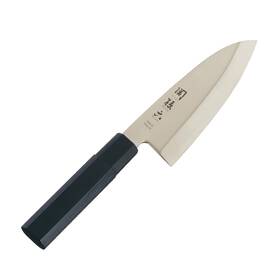
The **Kai AK-1101 Seki Magoroku Kinju Deba Knife** is a masterfully crafted, full-tang Japanese kitchen knife that embodies the timeless elegance and unparalleled craftsmanship of the Seki region, renowned for its legacy of blade-making since the Edo period. This 150mm (5.9-inch) single-bevel *deba* knife is designed with both the professional chef and the discerning home cook in mind, offering a harmonious blend of functionality, precision, and aesthetic appeal. The blade is forged from **Kinju steel**, a high-carbon, high-chromium alloy that delivers exceptional hardness and edge retention, ensuring years of razor-sharp performance with minimal maintenance. The single-bevel grind provides a versatile cutting angle that excels in both slicing and chopping tasks, particularly for breaking down fish, preparing sashimi, or butchering small game, while its sturdy, full-tang construction guarantees durability and balance. The *deba* shape broad at the base and tapering to a refined point allows for efficient leverage, making it ideal for tasks like filleting, deboning, and even mincing, where control and precision are paramount. The handle is meticulously crafted from **Japanese magnolia wood (kaya)**, a dense and stable material that offers a comfortable, non-slip grip, while the *tsuka-ita* (handle wrap) is traditionally bound with *juni* (Japanese hemp) cord, adding both texture and a touch of rustic charm. The *mei* (inscription) on the blade, often etched with the name *Magoroku* or the maker s mark, serves as a testament to the knife s heritage, linking it directly to the skilled artisans of Seki who have perfected the art of blade-making for centuries. Whether used for culinary mastery or as a cherished heirloom piece, the Kai AK-1101 Seki Magoroku Kinju Deba Knife is a testament to Japanese craftsmanship, where every detail from the blade s geometry to the handle s ergonomics is thoughtfully engineered to elevate both the art of cooking and the appreciation of fine tools.
### **Pros and Cons of the Kai AK-1101 Seki Magoroku Kinju Deba Knife (150mm, Single-Edged)**
#### **Pros:**1. **High-Quality Japanese Steel** The Seki Magoroku Kinju blade is made from high-carbon steel, offering excellent edge retention and durability. The steel is known for its balance of hardness and toughness, making it suitable for both chopping and slicing tasks.
2. **Traditional Japanese Craftsmanship** The blade is forged using traditional methods, including hand-hammering and differential hardening, which enhances its strength and sharpness. The craftsmanship reflects the precision and artistry of Japanese knife-making.
3. **Versatile Design** The deba knife is specifically designed for breaking down fish, but its sturdy construction and sharp edge make it useful for general kitchen tasks, including chopping vegetables, meat, and even light butchering.
4. **Comfortable Handle** The handle is typically made from high-quality materials like pakkawood or synthetic resin, providing a secure and ergonomic grip. The single-edged design also allows for a more natural cutting motion compared to double-edged knives.
5. **Durability** The blade s construction and heat treatment make it resistant to bending and chipping, ensuring longevity with proper care.
6. **Aesthetic Appeal** The knife often features a polished or hammered finish, along with intricate engravings or a simple yet elegant design, making it a desirable addition to a kitchen or collection.
7. **Good Weight Distribution** The balance between the blade and handle makes it easy to control, reducing fatigue during prolonged use.
---
#### **Cons:**1. **Single-Edged Design** Unlike double-edged knives, the single-edged deba knife requires a specific cutting technique, which may feel less intuitive for those accustomed to Western-style knives. It is not ideal for tasks like slicing thinly or peeling.
2. **Limited Versatility** While it excels at breaking down fish, it may not be as practical for everyday tasks like dicing onions or mincing garlic compared to a chef s knife or santoku.
3. **Maintenance Requirements** High-carbon steel blades require regular honing and occasional sharpening to maintain their edge. Neglecting maintenance can lead to dullness or rust if not stored properly.
4. **Price** As a premium Japanese knife, the Kai AK-1101 is more expensive than many Western kitchen knives. The cost reflects its craftsmanship, but it may not justify the investment for casual users.
5. **Weight** Some users may find the knife slightly heavier than lighter Western knives, which could lead to fatigue during extended use.
6. **Blade Length Limitations** At 150mm, the blade is shorter than some larger deba knives (e.g., 180mm or 200mm), which may limit its effectiveness for larger fish or heavy-duty tasks.
7. **Potential for Overkill** If you primarily use a chef s knife or santoku for most tasks, the deba knife may feel unnecessary unless you frequently work with fish or appreciate Japanese knives for their aesthetic and performance.
---
### **Conclusion:**The Kai AK-1101 Seki Magoroku Kinju Deba Knife is a high-quality, well-crafted tool that excels in specific tasks, particularly fish butchering and heavy chopping. Its traditional construction, sharpness, and durability make it a valuable addition for serious home cooks, fish enthusiasts, or collectors who appreciate Japanese knife-making. However, its single-edged design and niche use case may not make it the most practical choice for everyone.
If you frequently work with fish, value precision and craftsmanship, and are willing to invest in a specialized knife, this deba knife is an excellent choice. For those who prioritize versatility or use a variety of knives in their kitchen, it may be more of a supplementary tool rather than a primary one.
---
### **Recommendation:** **Buy the Kai AK-1101 Seki Magoroku Kinju Deba Knife if:**- You frequently prepare fish and need a dedicated knife for breaking down whole fish or filleting.
- You appreciate Japanese knife-making and are willing to invest in a high-quality, durable tool.
- You enjoy the aesthetic and ergonomic design of a traditional deba knife.
- You already own a versatile knife (e.g., chef s knife or santoku) and want to expand your collection.
**Avoid it if:**- You primarily use Western-style knives and don t have a specific need for a deba knife.
- You prefer a knife that can handle a wider range of tasks (e.g., slicing, dicing, mincing).
- You are on a tight budget and can find equally good alternatives at a lower price.
- You are uncomfortable with the single-edged design or the learning curve associated with it.
For a more balanced recommendation, consider pairing this deba knife with a high-quality chef s knife or santoku if you don t already own one. This way, you benefit from both specialized and versatile tools in your kitchen.
Details:
Specifications: nylon cap. Country of origin: Japan. Brand New Kai Seki Magoroku Kinju ST Japanese Deba Knife 150mm AK-1101, Manufacturer model: AK-1101 Material: blade body / molybdenum vanadium stainless steel cutlery, cap nylon heat-resistant temperature 90 degrees, handle laminated wood strengthening.: Kai Seki Magoroku Kinju ST Japanese Deba Knife 150mm AK-1101.
However, this will not affect the shipping times. Blade length : 150mm.
part #: ak1101 prices
- $70.22-$164.76
specifications sharpeneroz:
- brand: Kai
- mpn: Ak-1101
- part type: Knife
- upc: 699234404250
- style: Single Item
- pattern name: Blade 5.9 Inches
- gtin: 04901601438550
shipping sharpeneroz:
- class: Standard
- cost: $0.00
- type: Fixed
- transit: 4-8 Days
- service: Standard
general sharpeneroz:
- condition: New
- Kitchen, Dining Bar > Kitchen Tools Gadgets > Sharpeners
seller sharpeneroz:
- city: Within USA
- rating: 100.0%
- # reviews: 53207
offer sharpeneroz:
- options: Ship-to-home
- sold: 0
- availability: In Stock
- started: February 27, 2026
returns sharpeneroz:
- policy: Returns Accepted
- method: Money back
- time: 30 Days
- paid by: Seller
payments sharpeneroz:
- wallet: Google-pay
- other
- credit card: Mastercard
Kai AK-1101 Is Similar To:
- 5068 Kai Ab Pure Komachi Paring Knife Green Blade Protector (35.1% similar) Incredibly sharp and distinctly attention-getting pure Camacho 2 knives make a delightful addition to any kitchen. Kai AB5068 pure Camacho 2 paring knife color: green. The pure Camacho 2 color-matched monomer-resin handles are light weight and contoured for a comfortable remarkably nimble ...(March 26th, 2018)
- 6716n Kai Nakiri Knife 6.5 (32.7% similar) Dido 1K6 high-carbon stainless blade with brushed finish. Dishwasher safe. Wasabi black series. 5 blade wasabi black series Dido 1k stainless Keisha kitchen knives. Kai 6716N nacre knife made in china. Smooth black polypropylene handles blended with real bamboo powder and impregnated an ...(October 1st, 2017)
- 6720c Kai Chefs Knife Stainless (35% similar) Blade is embellished with the japanese characters for wasabi. Wasabi black series. Kai 6720C chefs knife stainless 8 blade wasabi black series Dido 1K6 high-carbon with brushed finish. Smooth black polypropylene handles blended with real bamboo powder and impregnated an antibacterial agent to ...(November 6th, 2017)
- 6723b Kai Bread Knife Blade Wasabi Black Series Daido 4901601477719 (25.9% similar) 9 blade kitchen knife type: bread made in china. Blade is embellished with the japanese characters for wasabi. Dishwasher safe. Wasabi black series. Keisha bread knife. Kai 6723B bread knife 9 blade wasabi black series Dido 1K6 high Keisha kitchen knives. Smooth black polypropylene handles blended ...(November 11th, 2018)
- Ab7068 Kai Luna Paring Knife Soft Grip Handles 087171043296 (32.1% similar) Mirror polish finish other info: hammered high carbon stainless blade. Standard edge black and gray soft grip handles. Hand washing and drying recommended...(June 17th, 2018)
- Ap-0305 Kai Japanese Whetstone 400 (34% similar) I can not read the japanese writing to describe it any more so please view pictures for details. Buyer pays shipping. The stone measures 7 inches long, 2/5 8 wide and 1 inch thick...(June 1st, 2017)
- Ap-5301 Kai Cube Kitchen Electric Stone Knife Sharpener 49016010131220 (33.8% similar) Kai cube kitchen electric stone knife sharpener AP-5301...(March 23rd, 2019)
- Ap5301eng Kai Usa Ltd Asian Electric Knife Sharpener Brand New In (33.6% similar) Anti-slip rubber pads add stability on smooth surfaces. Not suitable for single-bevel, ceramic, serrated or titanium knives, scissors. Pro chefs are trained to sharpen with a whetstone but why would they if achieve the same results in fraction of time. Restore japanese-style kitchen knives to prime ...(December 3rd, 2018)
- Ks7062 Kai Luna Bread Knife Fixed Blade Hammered Finish 087171043234 (31.4% similar) Kai 7062 Luna bread knife fixed overall: stainless serrated edge handle: black synthetic other info: hammered finish blade. Black synthetic sheath...(June 8th, 2018)
- Kai Usa Ap0138 Pro Diamond And Ceramic Retractable Sharpener Kitchen Knife For (29.3% similar) 3-STEP sharpening: this retractable knife sharpener sharpens quickly and easily with a simple 3-STEP process. Boxed with hanging tab. Kai pro diamond and ceramic retractable sharpener, kitchen knife sharpener for straight, double-bevel blades, easy to use, three-step sharpening process: USA diamond/...(October 2nd, 2023)
- Kai Kai Corporation 901601212624 Sharpener For Wave Edge Kitchen Knife Ap0163 Cook Bread New (30.5% similar) Condition is new. Kai sharpener for wave edge kitchen knife AP0163 cook bread new...(October 6th, 2023)